

RAK7268CV2 WisGate Edge Lite 2+ LTE gateway LoRaWAN 868 MHz

SKU:37AN
Cod. produttore:715118
Marca:RAKWireless Partner
Categorie:
Zertifizierungen:
Disponibilità CH:
pronto per la spedizione26
Da magazzino esterno:
Tempo di consegnain ca. 14 giorni
Il termine vale a partire da 10 pezzi. Per quantità inferiori chiedeteci. (?)

CHF234.00 IVA escl.

più spese di spedizione

8-channel indoor LoRaWAN gateway with a built-in network server – register sensors and collect data over MQTT without an external platform. Connection via Ethernet, WiFi or LTE, power optionally over PoE. Buffers received data if the connection drops. Setup through the web interface in a browser.

Passend dazu:

Mini DC PoE-Backup-USV/UPS für RAK Edge Gateway mit PoE-Ausgang

Kompatibel mit RAK7268V2, RAK7289V2 und RAK7240V2

 Aggiungi al confronto

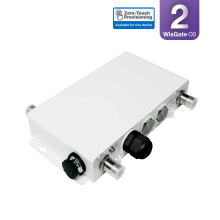
The RAK7268CV2 WisGate Edge Lite 2+ is our best-selling LoRaWAN gateway – for a simple reason: it brings everything you need to start a sensor network without first building a server landscape. Eight channels receive the sensors, the built-in network server processes them right in the device, and for the connection outwards you can choose Ethernet, WiFi or mobile. It is set up through a web interface in a browser, not on a command line. If the connection drops, it buffers the received data and delivers it afterwards. For a building, a business or a pilot project, this is the shortest route from nothing to a working LoRaWAN network.

  • 8 channelsreceived simultaneously
  • −139 dBmreceive sensitivity
  • 3 Wtypical power draw
  • LTE Cat 4mobile as the backhaul
  • PoEpower over the network cable

Why this gateway is chosen so often

  • Network server already built in: you can register sensors directly on the gateway and collect the data over MQTT – without an external network server, without a subscription, without a cloud account. For one site that is often all it takes. Anyone wanting to move to The Things Stack or ChirpStack later simply switches over.
  • Three routes to the internet: Ethernet, WiFi or mobile. The LTE route in particular opens up sites with no network connection – substation, warehouse, construction site.
  • Power over the network cable: with PoE you need no socket at the mounting position. That sounds trivial, but it often decides whether the gateway ends up at the best spot for radio or the next best one with a power outlet.
  • Data protection when the connection drops: if the link fails, the gateway buffers the received packets and delivers them afterwards instead of discarding them. The logs additionally land on the memory card – worth a great deal when someone asks afterwards why a sensor reading is missing.
  • Setup through the browser: for configuration the gateway opens its own WiFi. Connect, open the interface, configure – no cable, no console, no prior knowledge of OpenWRT.
  • Frugal in continuous operation: around three watts. A gateway runs around the clock; over a year that is a noticeable difference to hungrier devices.
  • Remote management built in: configuration, firmware updates and monitoring can be handled centrally – important as soon as more than a handful of gateways are in the field.

Where it is used

  • First network in a building: in normal construction one gateway covers several floors – for indoor climate, meters or door sensors that is usually enough for the whole property.
  • Businesses and production: machine and plant monitoring without pulling a cable for every sensor.
  • Agriculture: soil moisture, weather, silo levels – with LTE as the backhaul, also where there is no wired network.
  • Municipalities and utilities: water meters, levels, environmental data on your own network rather than via someone else’s infrastructure.
  • Pilot projects and development: quickly set up, fully configurable – ideal for testing a concept before larger sums are committed.
  • Supplementing public networks: where coverage from Swisscom or The Things Network ends, a gateway of your own closes the gap.
Built for indoors – and what that means. The housing is rated IP30 for dry indoor rooms. It belongs on the wall, under the ceiling or on a shelf, but not on the façade and not in a wet room. If the gateway itself has to go outside, our best-selling outdoor model, the WisGate Edge Prime RAK7240CV2, is the right choice. A common misconception here: mounting the gateway indoors does not mean the sensors have to be indoors — the range passes through walls without trouble to the yard, the neighbouring building or the field. For the vast majority of installations an indoor device with a well-placed antenna is the more economical solution. And on channel count: eight channels comfortably carry a few hundred sensors in normal operation; only with very dense networks and frequent transmit intervals does a 16-channel device become a topic.

That settles the selection. What follows is the depth for planning and operation.

What a built-in network server means – and where its limit lies

In a LoRaWAN network the gateway at first does only one thing: it receives radio packets and passes them on. It is the network server that decrypts them, manages the device keys and decides what happens to the data. Usually it runs elsewhere – at The Things Stack, ChirpStack or a provider. This gateway brings it along, which shortens the start dramatically: create sensors, collect data over MQTT, done.

The limit shows as soon as a second gateway is added. If two gateways receive the same sensor packet – which is normal and desirable – a shared network server would have to discard the duplicates. With one server per gateway that does not work cleanly. So as soon as you cover more than one site or plan overlap, you sensibly move to a central network server and run the gateways purely as receivers. The built-in server is the ideal start, not the end goal – and switching over is a matter of minutes.

Antenna and placement

The LoRa antenna is screwed on externally and therefore replaceable – that matters more than most datasheet figures. A gateway in the basement with the standard antenna achieves less than one on the top floor, and a higher-gain antenna brings extra range across a plane but less above and below. For a multi-storey building the supplied antenna is usually the better choice, for flat sites one with higher gain. Practical advice: place the gateway as high and as clear as possible, keep distance from metal surfaces and concrete floors, and run a test at the least favourable point before mounting a hundred sensors.

On transmission rights: a legal duty-cycle limit applies in the 868 MHz band. For the sensors that hardly matters; for the gateway it does – it answers joins and confirmations. Anyone registering many devices at once or using confirmed transmissions will eventually hit this limit. In practice that means: use confirmed messages sparingly, and do not have all devices join at once during a rollout.

Technical data

The general product data – protection rating, dimensions, connections, memory, certifications, supported bands – is in the detail table further down this page.

LoRaWAN
Channels8, Semtech SX1302 concentrator
Transmit powermax. 27 dBm
Receive sensitivity−139 dBm
LoRaWAN version1.0.3, device classes A and C
Network serverbuilt in, with MQTT bridge and TLS; can also run against an external server
Data protectionbuffer for received packets, logs on memory card
Connectivity
Ethernet100 Mbit/s with PoE per 802.3af
WiFi2.4 GHz (802.11b/g/n), also as an access point for setup
MobileLTE Cat 4, internal antenna, nano SIM
Operation
Power supply12 V DC or PoE
Power drawaround 3 W typical
Storage temperature−40 … +85 °C
Humidity0 … 95 % RH, non-condensing
Mountingfree-standing, wall mount or DIN rail
AntennasLoRa external via RP-SMA (replaceable), WiFi and LTE internal

Which variant suits you?

The WisGate family differs mainly in how the gateway reaches the internet and how it is powered. We stock all the models listed here ourselves – availability is shown on each product page.

ModelMobileWhat it is made for
RAK7268CV2 Edge Lite 2+
(this page)
yes, internal antennaThe all-rounder: Ethernet, WiFi and LTE on board, PoE capable. The right choice for most installations.
RAK7268 Edge Lite 2 with external LTE antennasyes, external antennasWhen mobile reception is weak at the installation point – the antennas can be moved to a better spot.
RAK7268 Edge Lite 2noWhen a network connection is available. Same LoRaWAN performance, cheaper.
WisGate Edge Lite 2 non-LTE, 9–24 VnoFor cabinet, vehicle or solar supply – takes any DC voltage between 9 and 24 volts.
RAK7266 Soho LiteyesThe compact variant for a small network or for getting started.
RAK7267 Soho ProyesMore equipment in the same form factor, if you need additional interfaces.
WisGate Edge Prime RAK7240CV2yesThe outdoor model with a weatherproof housing – when the gateway itself has to go outside.

Frequency variants

From us you get the European version for 868 MHz – the only one that may be operated in Switzerland and the EU. We source variants for other regions on request.

BandRegionAvailability
EU868Europe, SwitzerlandThis is the version you order here
US915, AU915, AS923, KR920, IN865, RU864, EU433, CN470other regionson request

Help with the build

The datasheet and instructions are under the Documents tab at the top of this page. Building your first LoRaWAN network and unsure about antenna choice, location, or whether the built-in network server is enough for your plans? Talk to us – these questions are settled in a ten-minute conversation, whereas a wrong decision can cost weeks. And if it turns into a project — sizing, pre-configuration or commissioning — we will gladly put together a quote.

+ Mostra altro

Dokumente

Recensioni

Ancora non ci sono recensioni.

Recensisci per primo “RAK7268CV2 WisGate Edge Lite 2+ LTE gateway LoRaWAN 868 MHz”

Details

Generale
Marca
RAKWireless
Codice produttore
715118
Colore
bianco
Interfaccia
4G-LTE
Eine Mobilfunktechnologie, die Hochgeschwindigkeits-Datenkommunikation für Mobiltelefone und Datenkarten ermöglicht. Verbreitet für mobiles Internet und IoT-Konnektivität.
,
802.11b/g/n
Standards für Wireless LAN (WiFi), die eine drahtlose Verbindung für Computer, Smart-Geräte und IoT-Geräte ermöglichen.
,
802.3af
Standards für Power over Ethernet (PoE), die die Lieferung von elektrischer Energie zu Netzwerkgeräten über Ethernet-Kabel ermöglichen. Typischerweise für Geräte wie IP-Kameras und VoIP-Telefone verwendet.->auch als PoE bezeichnetDieser Standard kann eine maximale Leistung von etwa 15.4 Watt pro Port bereitstellen. Nach dem Abzug des Energieverlusts durch das Ethernet-Kabel bleibt etwa 12.95 Watt für das Gerät übrig.
,
LoRa 868MHz
Version des LoRa (Long Range) Low-Power-Wireless-Chipsatzes, der auf verschiedenen Frequenzen arbeitet. Typischerweise für IoT-Anwendungen mit geringem Stromverbrauch und großer Reichweite verwendet.
,
PoE
Power over Ethernet, eine Technologie, die das Senden von Strom und Daten über ein Ethernet-Kabel ermöglicht. Typischerweise für Netzwerkgeräte wie Kameras und Access Points verwendet.
,
USB 2.0
Version des Universal Serial Bus-Standards, die eine Verbindung und Stromversorgung für eine Vielzahl von elektronischen Geräten ermöglichen.
Connettività
Connettività
4G-LTE
Vierte Generation des Mobilfunks, mit Long Term Evolution (LTE) Technologie für schnelleres mobiles Internet.
,
Ethernet
Ein Standard für kabelgebundene Netzwerke, der Datenübertragung in lokalen Netzwerken (LAN) ermöglicht.
,
LoRaWAN
Long Range Wide Area Network, ein drahtloses Protokoll für Low-Power-Geräte in weiträumigen Netzwerken, ideal für das IoT.
,
WiFi
Ein Standard für drahtlose Netzwerke, der Geräten ermöglicht, über ein drahtloses LAN (WLAN) miteinander zu kommunizieren.
Specifica LoRaWAN
1.0.3
Classe dispositivo
A
Klasse A-Geräte ermöglichen bidirektionale Kommunikation zwischen dem Gerät und dem Netzwerk. Nach jeder Uplink-Übertragung des Geräts sind zwei kurze Downlink-Empfangsfenster geöffnet. Diese Geräte haben die niedrigste Energieeffizienz und sind für Anwendungen geeignet, die keine festgelegten Empfangszeitpunkte erfordern. Beispielsweise könnte ein IoT-Sensor, der sporadisch Temperaturdaten an eine Cloud sendet, ein Klasse A-Gerät sein.
,
C
Klasse C-Geräte haben fast ständige Empfangsfenster, außer wenn sie selbst senden. Diese Geräte verbrauchen mehr Energie, ermöglichen jedoch eine nahezu Echtzeitkommunikation. Ein IoT-gesteuertes Straßenbeleuchtungssystem, das auf sofortige Befehle zur Helligkeitsanpassung reagieren muss, könnte ein Klasse C-Gerät sein.
Chip LoRa
SX1302
Antenna esterna
1x RP-SMA LoRaWAN
Antenna interna
LTE
,
WiFi
Frequenze
EU868
LoRaWAN-Frequenzband für Europa (868 MHz). Verwendet in Ländern wie Deutschland, Frankreich, Großbritannien und den meisten anderen europäischen Ländern.
,
GSM/EDGE: B3/B8
,
LTE FDD: B1/B3/B7/B8/B20/B28A
,
WCDMA: B1/B8
Numero di canali
8
Alimentazione
Alimentazione
12VDC
,
12VDC/1A
,
PoE (802.3af)
Tensione di ingresso [V]
12
Meccanica/design
Peso del prodotto (g)
300
Larghezza (mm)
166
Lunghezza (mm)
127
Altezza (mm)
36
Codice IP / protezione
IP30
Schutz gegen das Eindringen von festen Fremdkörpern mit einem Durchmesser von 2,5 mm und größer. Kein Schutz gegen das Eindringen von Wasser. Ein IoT-Gerät in einer geschützten industriellen Umgebung könnte dies erfüllen.
Intervallo di temperatura
-10 °C bis +55 °C
Collegamenti
Ethernet (RJ45)
Ethernet ist ein weit verbreiteter Standard für kabelgebundene Netzwerke, der die Datenkommunikation in lokalen Netzwerken (LANs) ermöglicht. RJ45 ist die gebräuchliche Bezeichnung für den Steckverbindertyp, der üblicherweise mit Ethernet-Kabeln verwendet wird.
,
USB Type-C
Schede
Micro SD
,
Nano-SIM (4FF)
Informazioni commerciali
Marcatura del prodotto
Anatel

Anatel-Zertifizierung:
Zeigt an, dass das Produkt von der brasilianischen Nationalen Telekommunikationsagentur (Anatel) zertifiziert wurde, um die technischen und Sicherheitsstandards für Telekommunikations- und Hochfrequenzprodukte in Brasilien zu erfüllen.

,
CE
CE-Zertifizierung: Zeigt an, dass das Produkt die Gesundheits-, Sicherheits- und Umweltschutzanforderungen der Europäischen Union erfüllt und im Europäischen Wirtschaftsraum (EWR) verkauft werden darf.
,
FCC

FCC-Zertifizierung:
Zeigt an, dass das elektronische Gerät die Vorschriften der Federal Communications Commission für elektromagnetische Störungen und Hochfrequenzstrahlung in den Vereinigten Staaten einhält.

,
ISED

ISED:
ISED (Innovation, Science and Economic Development Canada) ist die kanadische Regierungsbehörde, die für die Zertifizierung von Funkgeräten und Telekommunikationsgeräten verantwortlich ist. Die Zertifizierung stellt sicher, dass diese Geräte den kanadischen technischen Standards entsprechen und legal in Kanada verkauft und betrieben werden können.

,
JRL

JRL:
JRL (Japan Radio Law) ist ein Gesetz, das die Nutzung von Funkgeräten in Japan regelt, einschließlich der Zertifizierung von spezifizierten Funkgeräten. Es stellt sicher, dass solche Geräte den technischen Standards entsprechen und eine Zertifizierung erfordern, um die Einhaltung zu gewährleisten.

,
JTBL

JTBL:
JTBL (Japan Telecommunication Business Law) ist ein Gesetz, das die Telekommunikationsbranche in Japan reguliert, einschließlich der Zertifizierung von Telekommunikationsgeräten. Es stellt sicher, dass solche Geräte den technischen Standards entsprechen und möglicherweise eine Zertifizierung erfordern, um die Einhaltung zu gewährleisten.

,
KC

KC:
KC (Korean Certification) ist eine zwingende Zertifizierung für viele Produkte in Südkorea, insbesondere für elektronische und elektrische Geräte. Sie stellt sicher, dass die Produkte den koreanischen Sicherheits- und Qualitätsstandards entsprechen. Der Zertifizierungsprozess umfasst die Einreichung von Antragsunterlagen, Produkttests und in manchen Fällen Fabrikbesichtigungen, je nach Zertifizierungstyp (Typ 1, 2 oder 3). Zertifizierte Produkte dürfen das KC-Kennzeichen tragen, das die Einhaltung der koreanischen Vorschriften anzeigt.

,
RCM

RCM-Zertifizierung:
Zeigt an, dass das Produkt die regulatorischen Anforderungen für Sicherheit und Konformität in Australien und Neuseeland erfüllt, wie durch das Regulatory Compliance Mark (RCM) angezeigt.

,
Reach

REACH-Zertifizierung:
Zeigt an, dass das Produkt die REACH-Verordnung der Europäischen Union einhält, die Registrierung, Bewertung, Zulassung und Beschränkung von Chemikalien vorschreibt, um den Schutz von Mensch und Umwelt zu gewährleisten.

,
RoHS

RoHS-Zertifizierung:
Zeigt an, dass das Produkt die Richtlinie der Europäischen Union zur Beschränkung gefährlicher Stoffe einhält, die den Einsatz von Materialien wie Blei, Quecksilber und Cadmium in elektrischen und elektronischen Geräten einschränkt.

,
RSM

RSM-Zertifizierung:
Zeigt an, dass das Produkt die Anforderungen der Radio Spectrum Management (RSM) in Neuseeland erfüllt, einer Behörde, die für die Verwaltung des Funkfrequenzspektrums zuständig ist. Die Zertifizierung stellt sicher, dass Funkgeräte den technischen Standards entsprechen, um Interferenzen zu vermeiden und eine effiziente Nutzung des Spektrums zu gewährleisten.

,
SRRC

SRRC:
SRRC (State Radio Regulation of China) ist die chinesische Behörde, die für die Zertifizierung von Funkgeräten verantwortlich ist. Die Zertifizierung ist für Geräte mit Funkübertragungsfunktion erforderlich, um sicherzustellen, dass sie den chinesischen technischen Standards und Frequenzregulierungen entsprechen und legal in China verkauft oder genutzt werden können.

,
SUBTEL

SUBTEL-Zertifizierung:
Zeigt an, dass das Produkt von der Subsecretaría de Telecomunicaciones (SUBTEL), der Telekommunikationsbehörde in Chile, zertifiziert wurde, um die technischen Standards des Landes für Telekommunikations- und Funktechnologien zu erfüllen.

,
UKCA

UKCA-Zertifizierung:
Zeigt an, dass das Produkt die regulatorischen Anforderungen des Vereinigten Königreichs für Sicherheit, Gesundheit und Umweltschutz erfüllt, wie durch das UK Conformity Assessed (UKCA)-Zeichen angezeigt, das für Produkte erforderlich ist, die in Großbritannien verkauft werden.

Paese d’origine
Cina
HS Code
8517623990
Altre caratteristiche
RAM
128 MB
Caratteristiche
PoE
,
registrazione
,
firewall
,
OpenVPN
Memoria esterna
Micro SD Card
CPU
MT7628
Tipo di montaggio
Wand
Luogo d’impiego
interno
Server di rete
ChirpStack
,
herstellereigene Plattform
,
TTN

Ti potrebbe interessare…